Safe Sleep - Room Sharing

Room Sharing vs. Bed Sharing
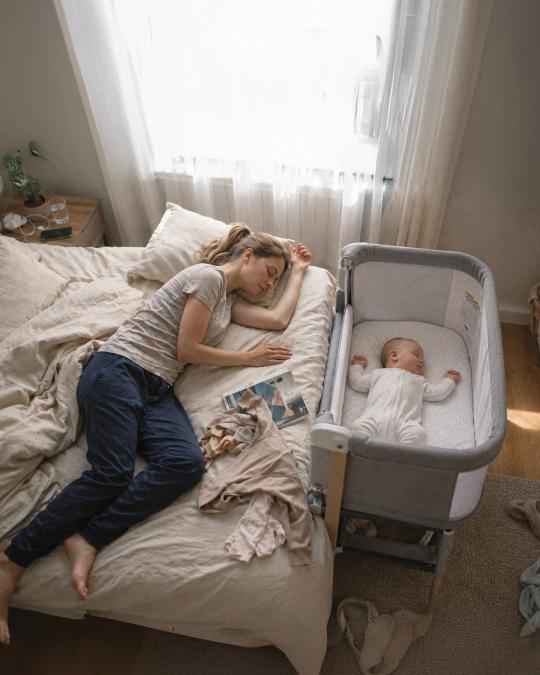 While co-sleeping may feel convenient and culturally familiar, bed-sharing- where an infant sleeps in the same bed as a parent- carries significant risks, including suffocation and other sleep-related dangers for infants. Experts recommend room-sharing without bed-sharing, where the infant sleeps in the same room as the parents but on a separate, safe sleep surface such as a crib, bassinet, or bedside sleeper. This allows parents to remain close to their baby while decreasing the dangers associated with co-sleeping.
Bed-sharing——can be dangerous due to several factors:
- Adult mattresses are usually softer and contouring to support an adult’s body, even when labelled as “firm”. Adult mattresses, pillows, blankets, and other items can block an infant’s airway, making it difficult to breathe and increasing the risk of suffocation.
- When a caregiver is asleep, they do not have control over their body. They could unintentionally roll onto the infant during sleep, which can lead to injury or death.
- Infants can fall from the bed or get wedged between the wall/headboard and mattress.
- Research shows that bed-sharing can multiply the risk of SIDS, particularly in infants under three months old.
Some people believe that co-sleeping is the “best” way for a caregiver to bond with their baby, but the truth is, there is no “best” way to bond with your baby. What works for one caregiver/baby, may not work for another. Skin-to-skin contact, making eye contact and talking to your baby while holding/feeding them and playing with them are all proven ways to help with bonding. These happen during awake times and are safer than co-sleeping. Additionally, co-sleeping can lead to fragmented sleep for both the infant and caregiver. It can also delay the development of independent sleep habits.


