Safe Sleep - Principles

Follow the ABCD's of Safe Sleep
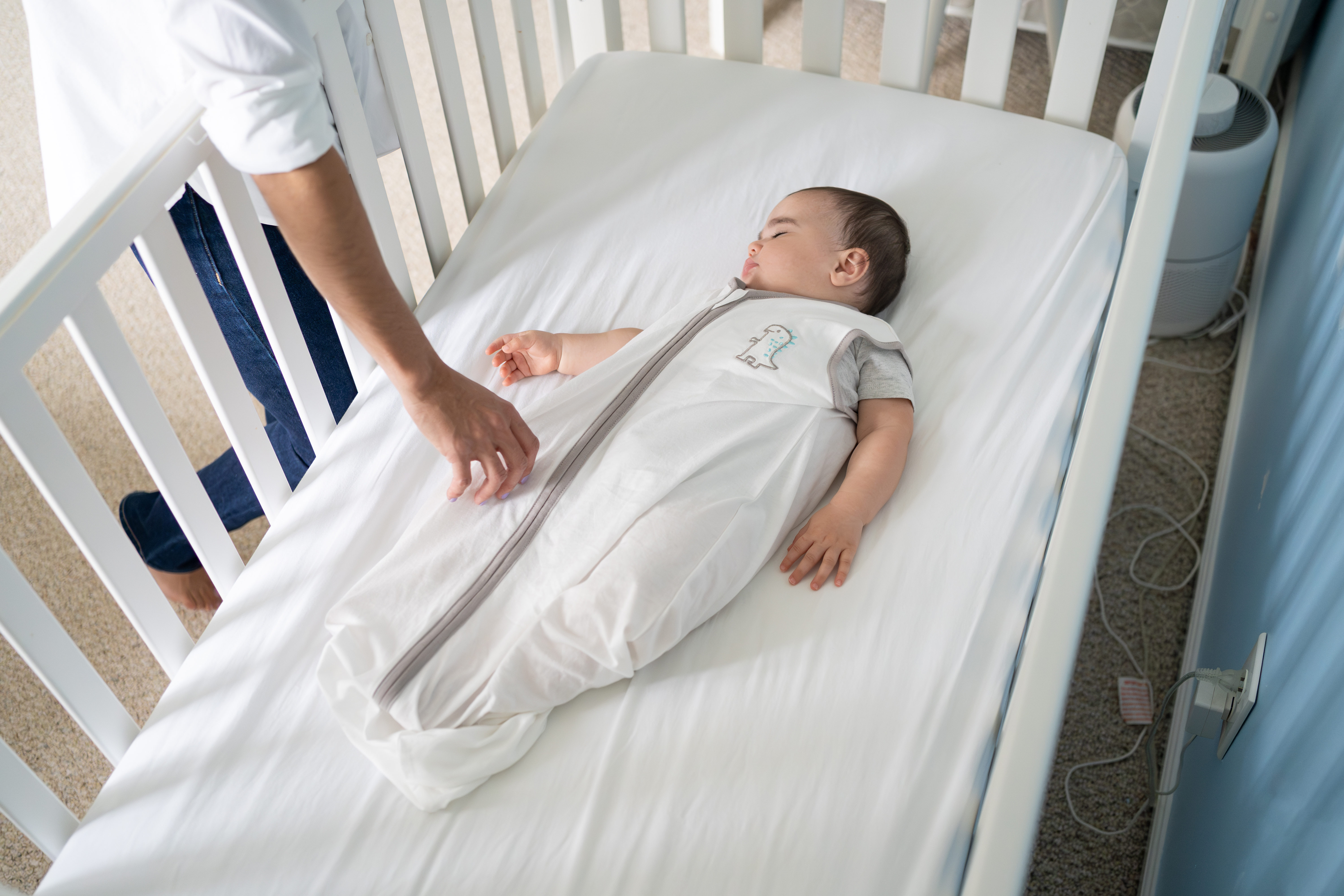
The safest sleep environment for an infant is alone, on his/her back, on a firm surface. Alone doesn’t mean your baby is by him/herself. Alone means that your baby sleeps in the same room as you, but in his/her own crib or bassinet. Room-sharing with your baby will encourage all of the bonding and physical contact you desire without the increased risks of SIDS, suffocation and entrapment inherent with bed-sharing.
A minimalist sleep space is a safe sleep space. Your baby should sleep apart from any objects, toys, pillows or blankets which can be hazardous in a sleep environment. Toys are best utilized during supervised tummy play time instead.

Baby should be placed to sleep on their back for all naps and at night.
When an infant is lying on his/his back, the breathing tube (trachea) lays on top of the feeding tube (esophagus). Placing an infant to sleep on his/her back, allows the child to breathe more easily through the nose during sleep and helps keep food and fluid in the baby’s stomach further from the airway.

Babies should always sleep on a firm, flat surface. Safe examples are a crib, bassinet or pack-n-play, with a firm, flat mattress covered by only a fitted sheet.
Always adhere to safe sleep practices during every sleep and with every caregiver. Safe sleep is a choice your baby cannot make for him/herself, so it is up to us as a community to educate ourselves and others until these practices are a part of every child’s daily routine.
Do not smoke (cigarettes, marijuana or vape) around your baby. Babies exposed to smoke have more colds and other illnesses, which increases a baby’s risk of dying while sleeping.


